
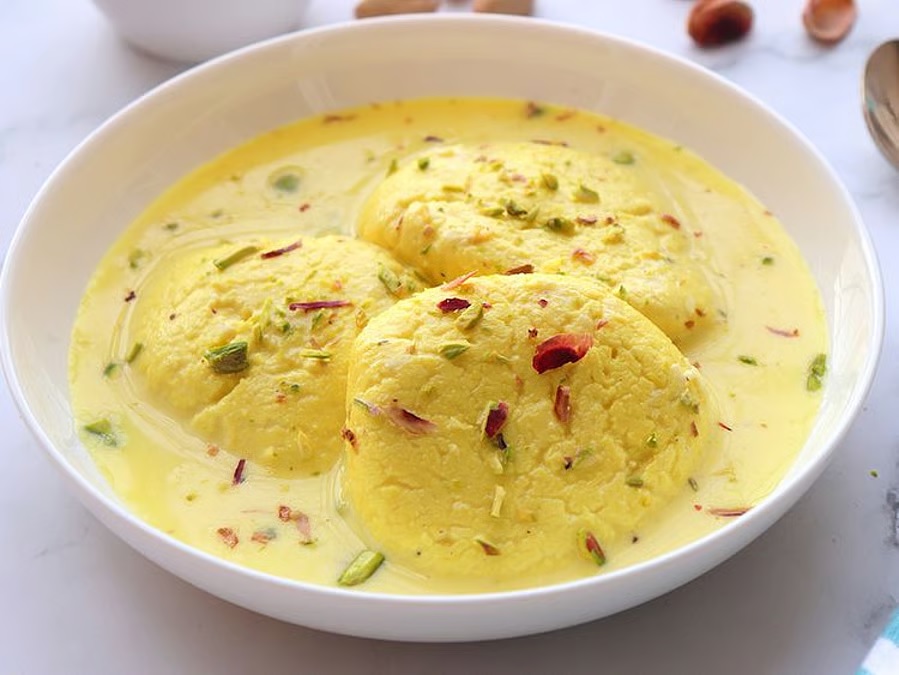
Rasmalai is basically soft chhena discs soaked in sweetened milk flavored with saffron and cardamom. It is often served at weddings, festivals, and family celebrations, but its exact history is less certain.
The Rasmalai origin is generally associated with Bengal, but both Kolkata and Cumilla have origin stories connected to the sweet. The stories behind these claims, its connection to rasgulla, and how rasmalai has changed over time make its history worth a closer look.
Rasmalai’s Journey from Tradition to Modern Dessert
The Bengali Roots of Rasmalai
The name rasmalai comes from the Bengali roshomalai. “Rosh” refers to juice or liquid, while “malai” refers to cream. The dessert is traditionally made with soft chhena discs soaked in thickened, sweetened milk flavored with saffron and cardamom.
Rasmalai is often linked to Bengal, but its origin is still debated. K.C. Das’ grandsons say that Krishna Chandra Das made it in Kolkata in the early 1900s. They say rasmalai is connected to rasgulla, which their father, Nobin Chandra Das, created. They also cite an old 1932 advertisement as proof that rasmalai was sold then.
On the other hand, some say rasmalai started in Cumilla, Bangladesh. The Sen brothers started a shop called Matri Bhandar there in 1930. Many local stories say this shop helped make Cumilla Rasmalai popular and spread it. In 2023, Bangladesh gave Cumilla Rasmalai special recognition as a Geographical Indication.
Rasmalai and Its Rasgulla Connection
Rasmalai and rasgulla both use a main ingredient called chhena. Rasgulla is made from soft chhena balls cooked in a sugary syrup. Rasmalai uses similar chhena, but it is soaked in rich, flavored milk. Although they are related and share some ingredients, their textures and how they are served are different.
The Kolkata origin story also links rasmalai with rasgulla. According to K.C. Das Grandsons, Krishna Chandra Das adapted the rasgulla-making tradition to create rasmalai. K.T. Achaya also connected rasmalai with the earlier rasgulla tradition in Indian Food: A Historical Companion.
Why Rasmalai Became a Festive Favorite
Rasmalai is usually eaten at celebrations since its cold, creamy texture and sweet milk taste make it a popular choice for festive occasions.
The dish is also enriched with saffron, cardamom, almonds, and pistachios, which add color, fragrance, and crunch.
Over time, rasmalai became popular beyond Bengal as sweet shops in other regions began serving it.
What Goes Into a Traditional Rasmalai
This easy version uses ready-made rasgullas with reduced milk, saffron, cardamom, and nuts.
| Item | Quantity |
| Rasgullas | 10–12 pieces |
| Whole milk | 1 litre |
| Sugar | 4–5 tbsp |
| Saffron | A few strands |
| Cardamom powder | ½ tsp |
| Almonds and pistachios | 2 tbsp, sliced |
| Rose water | 1 tsp |
How To Make It:
Step 1: Soak the almonds and pistachios in warm water for about 30–40 minutes. Peel and slice them.
Step 2: Pour the milk into a heavy-bottomed pan and bring it to a boil.
Step 3: Lower the heat and simmer until the milk reduces to about half its original volume, stirring occasionally to prevent it from sticking.
Step 4: Mix the saffron with a little warm milk. Add it to the reduced milk along with sugar and cardamom powder.
Step 5: Gently squeeze out most of the syrup from the rasgullas and place them in the warm milk.
Step 6: Add most of the sliced nuts and let the rasmalai warm gently for a few minutes.
Step 7: Turn off the heat and stir in the rose water. Let it cool before refrigerating.
Step 8: Chill the rasmalai and garnish with the remaining nuts and a few saffron strands before serving.
Rasmalai Cheesecake: A Modern Twist
The soft texture and familiar flavors of rasmalai also work well in modern desserts. Flavors such as saffron and cardamom, along with rabri, work well in cheesecake.
A rasmalai cheesecake usually has a biscuit base and a creamy cream cheese filling flavored with reduced milk, saffron, cardamom, or rose water. Some recipes include pieces of rasmalai inside the filling or as a topping.
Conclusion
The exact origin of rasmalai remains uncertain, with both Kolkata and Cumilla linked to different origin stories. Its connection with rasgulla is an important part of its history, while sweetened milk, saffron, cardamom, and nuts remain familiar parts of the dessert.
The same flavors are also used in newer desserts such as rasmalai cheesecake, which puts a different spin on the classic sweet.
