
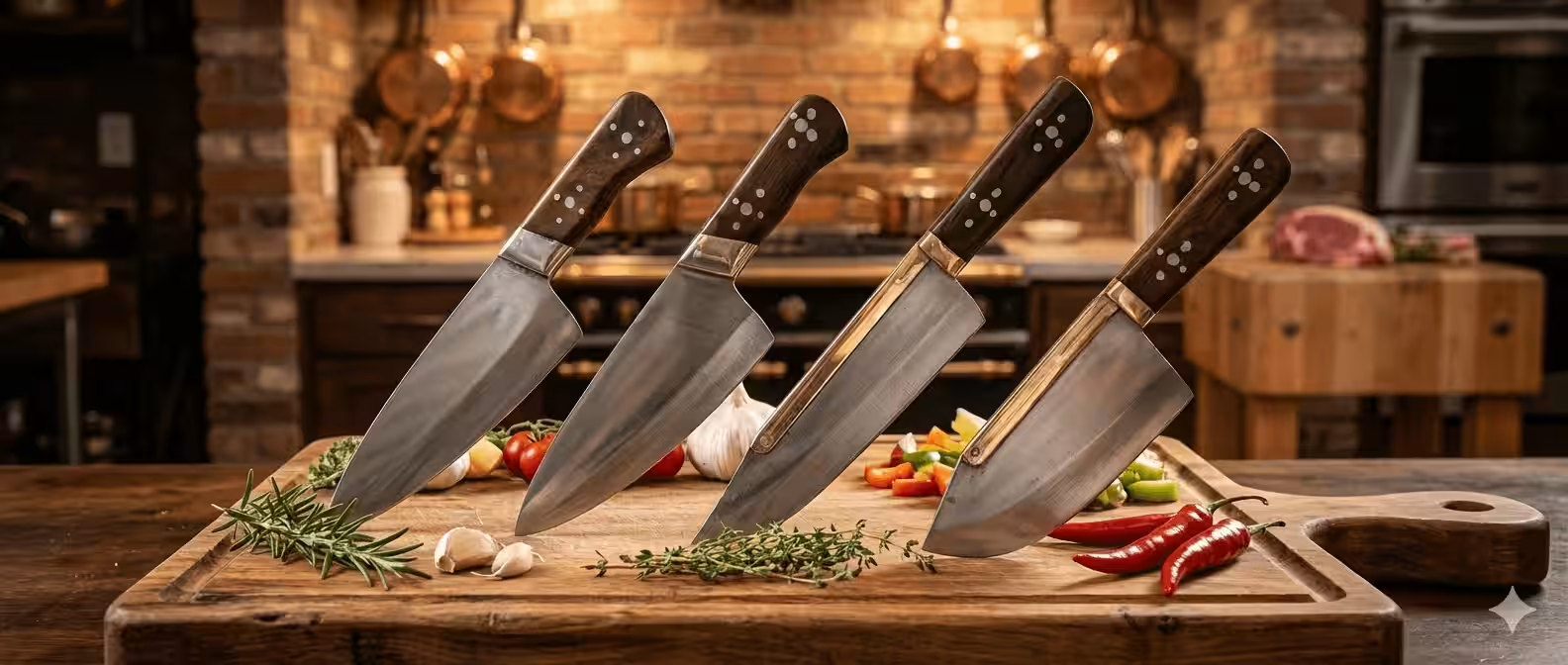
In the realm of culinary tools, no single instrument is more fundamental, versatile, or deeply personal than the chef knife. It functions as an extension of the cook’s hand, transforming raw ingredients into precisely executed culinary creations. Whether you are an aspiring home cook or a seasoned professional working a grueling line shift, a high-quality chef knife is the definitive foundation of your kitchen toolkit.
Investing in a premium knife is only the first step. Understanding the anatomy of the blade, recognizing the structural differences between global manufacturing traditions, mastering the physics of sharpening, and implementing strict maintenance protocols are all essential components of knife ownership. When properly understood and cared for, a single exceptional chef knife can easily last a lifetime, maintaining its edge, balance, and reliability through countless hours of prep work.
Anatomy and Anatomy: Understanding What You are Buying
Before stepping foot into a cutlery store or browsing online retail galleries, you must understand the vocabulary of knife construction. A chef knife is not just a singular piece of sharpened metal; it is a carefully engineered system of balanced components.
-
The Blade: The main body of the knife, extending from the tip to the bolster.
-
The Spine: The unsharpened top edge of the blade. A thicker spine provides structural rigidity and weight, while a thinner spine allows for delicate, low-resistance slicing.
-
The Bolster: The thick collar of steel located between the blade and the handle. It provides a smooth transition zone, adds counter-balancing weight, and offers a safe resting point for your fingers when utilizing a professional pinch grip.
-
The Tang: The extension of the steel blade that runs deep into the handle material. A full-tang knife features steel that extends entirely to the very butt of the handle, providing superior balance, durability, and structural strength. Partial-tang knives are prone to snapping at the handle joint under heavy pressure.
-
The Edge and Heel: The cutting edge runs from the tip to the heel. The heel is the rear portion of the edge, closest to the handle, used for heavy duty cutting tasks that require maximum leverage, such as hacking through dense root vegetables.
Western vs. Japanese Manufacturing Traditions
The global knife market is broadly divided between German-style Western blades and traditional Japanese blades. Understanding your specific cooking style will dictate which school of manufacturing fits your kitchen best.
German knives, built by legendary heritage brands, are the workhorses of the culinary world. They are typically forged from softer, more forgiving steel alloys. This structural choice means the blade is highly durable, resistant to chipping when striking bone or dense materials, and can withstand significant physical abuse. Western blades feature a distinct, rounded belly curve along the cutting edge, which is specifically engineered to facilitate a rhythmic rocking motion across the cutting board. They are typically sharpened to a total edge angle of twenty degrees on each side.
Japanese knives, conversely, are precision instruments. They are crafted from incredibly hard carbon steel or advanced powder steel alloys. Because the steel is so hard, it can be ground to a much narrower, sharper cutting angle, often between ten to fifteen degrees per side. This yields a blade that slices through delicate ingredients with virtually zero resistance, preserving the cellular integrity of proteins and vegetables. However, this hardness makes the steel brittle; hitting a bone, a frozen item, or a hard plastic cutting board can easily chip or shatter the fine edge. Japanese blades also tend to feature a straighter edge profile, favoring an up-and-down push-cut or pull-cut technique rather than a rocking motion.
The Physics of Maintenance: Honing vs. Sharpening
A common misconception among home cooks is that a honing steel sharpens a dull knife. It does not. To maintain a razor-sharp edge safely, you must understand the distinct mechanical differences between these two vital maintenance processes.
Daily Maintenance: The Honing Steel
As you use a knife against a cutting board, the microscopic apex of the razor edge eventually bends, curls, or misaligns to one side due to physical friction. The knife begins to feel dull because the bent edge is sliding over the food rather than slicing through it cleanly.
A honing rod, whether made of smooth steel or ribbed metal, does not remove any metal from the blade. Instead, drawing the blade down the rod at the correct angle physically coaxes that microscopic curled edge back into a perfectly straight, centered alignment. Honing should be done frequently, ideally before or after every significant meal preparation session, to keep the blade performing optimally between true sharpening intervals.
True Restoration: The Whetstone
When a knife is truly dull, the microscopic cutting apex has worn away completely, leaving behind a rounded, blunt edge. To restore sharpness, you must physically grind away old steel to reveal a fresh, sharp apex. The absolute best tool for this process is a dual-grit whetstone.
-
Soak the Stone: Submerge your water stone in water for ten to fifteen minutes until air bubbles stop rising to the surface, indicating the stone is fully saturated. Place it on a damp towel or a non-slip rubber base to keep it stable.
-
Establish the Angle: Set your knife blade flat against the coarse grit side of the stone. Tilt the spine upward until you achieve the correct sharpening angle for your blade type, typically fifteen degrees for a Japanese blade or twenty degrees for a Western blade. A helpful visualization technique is to imagine matching the angle of a single matchbook placed under the spine.
-
Execute the Stroke: Placing light, even pressure with your fingertips near the cutting edge, push the blade away from you across the stone in a smooth, sweeping motion, working from the heel of the knife to the tip. Maintain the exact same angle throughout the entire stroke.
-
Feel for the Burr: Repeat this process on one side until you can feel a burr forming along the opposite side of the edge. A burr is a microscopic ridge of steel pushed over the edge, signaling that you have successfully ground through the old metal to the center point. Once the burr is consistent across the entire length of the blade, flip the knife over and repeat the exact process at the same angle on the opposite side.
-
Refine and Polish: Switch the whetstone over to the fine-grit finishing side. Perform light, alternating strokes on each side of the blade to remove the burr and polish the newly established cutting apex to a smooth, razor finish.
Crucial Care Practices for Longevity
The finest knife in the world will degrade rapidly if subjected to improper cleaning and storage habits. Implementing a strict care regimen prevents corrosion, structural damage, and premature dulling.
-
Hand Wash Instantly: Never, under any circumstances, place a quality chef knife inside an automatic dishwasher. The combination of intense heat, prolonged moisture, and harsh caustic detergents will pit the steel, corrode the rivets, warp wood or composite handles, and cause the knife to bang violently against other items, chipping the delicate edge. Instead, wash the knife by hand immediately after use with warm, soapy water and a soft sponge.
-
Dry Thoroughly and Store Dry: Carbon steel and even high-grade stainless steels are susceptible to rust if left wet. Wipe the knife dry with a clean kitchen towel immediately after washing. If you are utilizing a traditional high-carbon Japanese steel knife, apply a drop of food-safe mineral oil or camellia oil to the blade surface before storage to form a protective moisture barrier.
-
Choose the Right Surface: The material of your cutting board directly dictates how long your knife stays sharp. Avoid cutting on glass, marble, granite, ceramic tiles, or stainless steel countertops. These surfaces are harder than the knife steel and will instantly roll, dull, or chip your edge upon contact. Stick exclusively to end-grain wood, thick edge-grain wooden blocks, or soft rubberized composite cutting boards designed specifically to cushion the blade impact.
Frequently Asked Questions
What is the difference between stamped and forged knives?
Forged knives are created from a single piece of heated steel that is hammered into shape under intense pressure before being ground and polished. This process alters the molecular structure of the steel, making it denser, heavier, and less prone to breaking, typically resulting in a built-in bolster. Stamped knives are cut mechanically out of a large, flat sheet of cold steel, much like a cookie cutter. They are generally lighter, thinner, lack a bolster, and while modern stamping technology has improved dramatically, they often lack the structural balance and edge retention of a classic forged blade.
How often should I truly sharpen my chef knife on a whetstone?
For an average home cook who prepares meals several times a week, a true sharpening session on a whetstone is typically required only two to three times a year, provided the blade is honed regularly with a steel. Professional chefs working in high-volume environments may need to sharpen their primary knives every two to four weeks to maintain the necessary peak performance.
Can I use a ceramic honing rod instead of a traditional metal steel?
Yes, ceramic honing rods are an excellent alternative, especially for exceptionally hard Japanese knives. Unlike steel rods, which only realign the metal, ceramic is a harder material that removes a microscopic amount of steel as you draw the blade across it. This allows a ceramic rod to perform a very mild touch-up sharpening function alongside alignment, helping prolong the time needed between deep whetstone sessions.
What is the paper test, and how do I use it to check knife sharpness?
The paper test is a simple method to evaluate the condition of your cutting edge. Hold a standard sheet of printer paper vertically between two fingers. Attempt to slice downward through the top edge of the paper using the heel of the knife, drawing the blade toward the tip. A truly sharp knife will effortlessly bite into the paper and slice it cleanly in a straight line without tearing, snagging, or crushing the paper fibers.
What is the difference between stainless steel and high-carbon steel knives?
Stainless steel contains chromium, which forms a protective layer that resists rust, staining, and corrosion, making it low-maintenance but generally softer and slightly harder to sharpen to an ultra-fine edge. High-carbon steel lacks significant chromium; it can be sharpened to an extraordinarily fine, razor-sharp edge that holds its sharpness for a long time. However, carbon steel requires strict maintenance because it reacts chemically with acidic foods, turning dark over time and rusting quickly if left wet.
What are the safest ways to store a chef knife to protect the edge?
Storing knives loose inside a crowded kitchen drawer is dangerous for your fingers and highly damaging to the blades, as they will nick and dull each other upon contact. The safest options include an external magnetic knife strip mounted to the wall, a dedicated countertop wooden knife block, or individual protective plastic or wooden blade guards, often called sayas, if the knife must be kept inside a drawer system.
